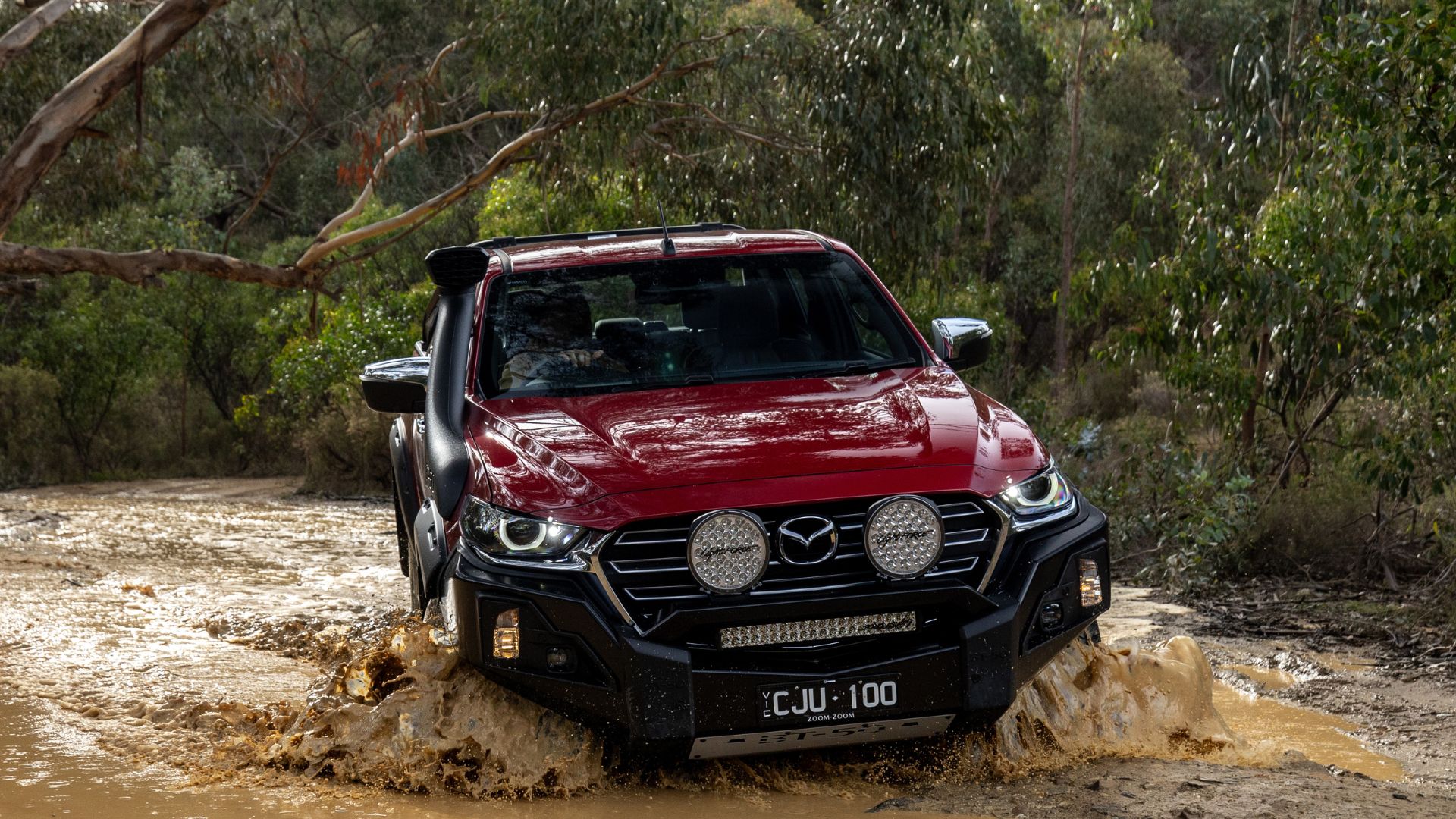
Mazda BT-50 Tech Drive: Water Crossings
Mazda BT-50 Water Crossings tips for Safe Off-road Driving in Australia
Get wet without taking a bath
Even the most experienced off-road drivers love a big muddy splash but there are some steps to follow before putting a rubber toe in the water.
How deep is the crossing? Is it flowing too quickly? What’s the underwater surface like? And even though you might have a snorkel fitted, it’s not a reason to dive deep.
With a wading depth of up to 800 mm, crossing water in the Mazda BT-50 can be simple. It’s all about choosing the right conditions and taking the right steps, as you’ll see in this video.
Mazda BT-50 Tech Drive: Water Crossings Watch on YouTube
All right, as I’m driving through, I can see that I am approaching a bit of a water crossing. Before I tackle this crossing, there are some considerations I need to take. I need to make sure that the environment is safe and that the water isn’t too deep.
Right now, I can park the vehicle, grab a stick from the environment, or even use a shovel if I have one on board, to test the ground surface and ensure it’s safe. The Mazda BT-50 has a wading depth of 800 mm, and yes, I do have a snorkel. It’s important to note, however, that the snorkel does not increase that maximum 800 mm wading depth. The benefit of the snorkel is to allow fresh, clean air at a higher entry point.
I just want to clear up any misconception that having a snorkel means you can enter water crossings above the bonnet—that is not the case at all.
Okay, I’ve tested the water. It’s quite shallow, so we’re good to go. I’m going to approach at a moderate speed and track through as normal. There’s no need to rush, especially since there are small wombat holes under the water. By keeping a steady pace, we can navigate safely.
I may have gotten some water through the chassis, so I’m going to pause here for about 10 seconds to allow it to drain. As I drive naturally, the water will eventually drain anyway, but if I continue immediately, it could affect the track beyond. Environmental preservation is a key consideration in four-wheel driving.
Okay, we’re good to go.