A CX-5 on the coast for whales and more
Words and photos by Jane Johnston
Call me ready: whale-mad and excited to drive the NSW South Coast in a CX-5, catching moments in the epic annual migration of whales.
I’m in Huskisson on Jervis Bay in the Shoalhaven, and my destination is Eden on Twofold Bay in the Eurobodalla. That’s only a four-hour drive, done straight, but I’m taking four days, reaching Eden on the third and turning the CX-5 back north on the fourth.
Craving the momentum of extended time at the wheel of this mid-size SUV at the most luxurious level, the AKERA, I’ll drive past a lot. But I’ll also allow ample time when I stop, binoculars pointed seaward.
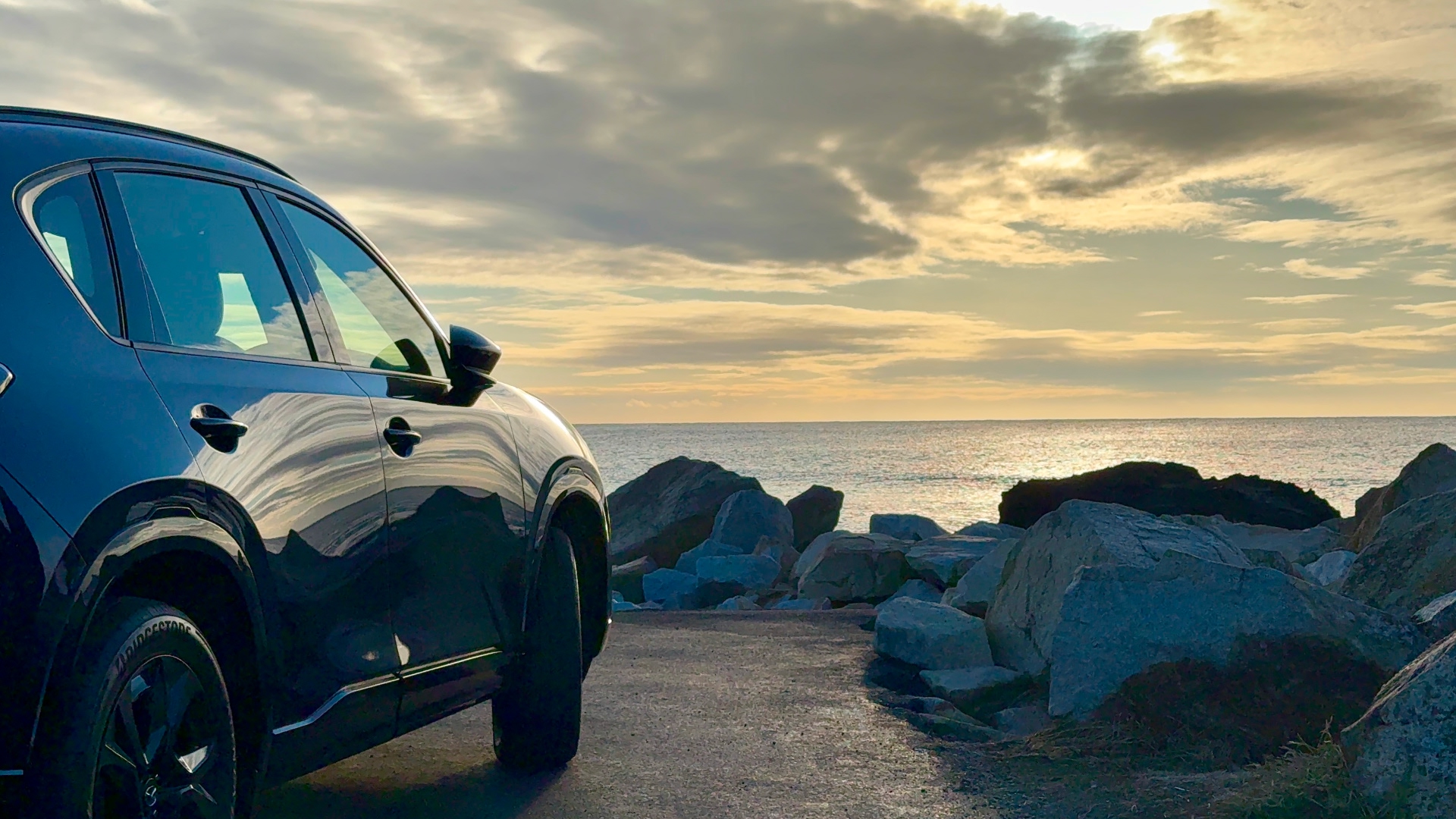
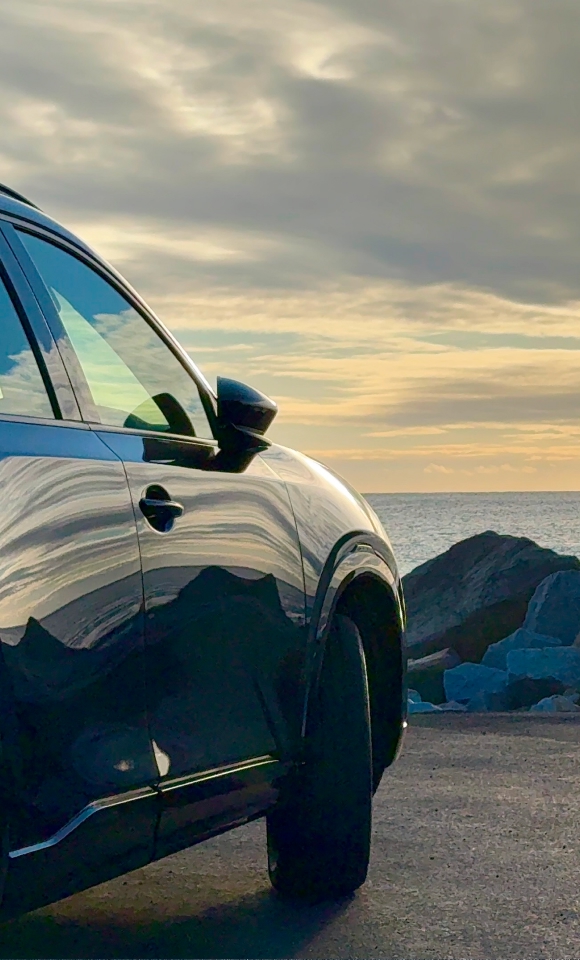
CX-5 by the sea. Navy Blue Mica exterior. Sports Tan interior
I’ve read Herman Melville’s classic 1851 novel, Moby Dick. Its timeless truths include that patience is key when on lookout for whales.
But patience won’t help at the wrong time of year, so when do you look? The species most often seen off this coast is the humpback, and there’s a timing to their ‘humpback highway’ route.
When Do Humpback Whales Migrate Along the NSW South Coast?
Within May–August they swim north past NSW, having left their usual waters near Antarctica to breed and give birth in the warmer waters off QLD or northern NSW. Over August–November they return south with their calves.
So, also call me confident. It’s July, and I’ve booked a whale watching boat cruise to start this trip.
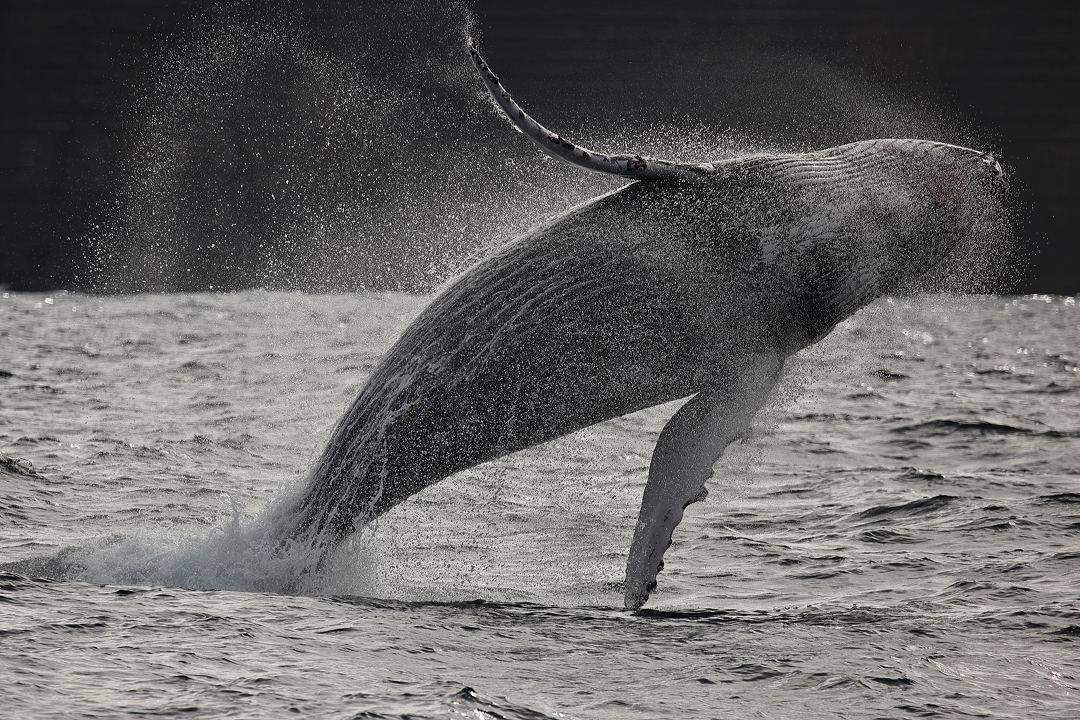
Humpback whale breaching. Photo: Chris Senior
Jervis Bay: Huskisson and the Whale Cruise with Jervis Bay Wild
Huskisson or Husky, as locals call it, was inducted into the Hall of Fame for sustained excellence as a Tiny Town at the 2026 NSW Top Tourism Town Awards. You’ll understand why once there, experiencing what it offers in town and as a gateway to seaside experiences across the area.
Jervis Bay is famed for sea sports. Its waters are covered by the Jervis Bay Marine Park, and are typically remarkably clear and calm, with diverse and abundant sea life.
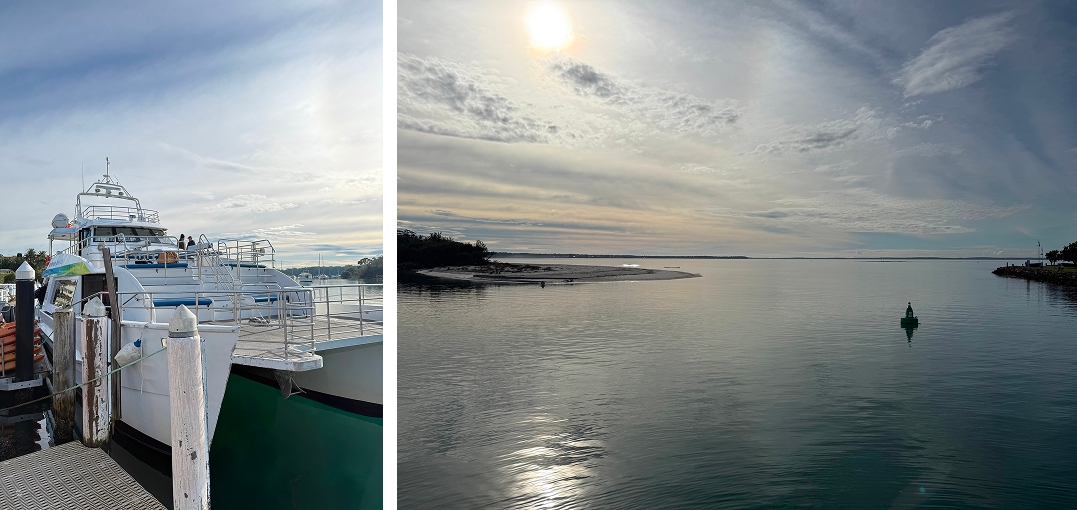
Leaving Huskisson for a Whale Cruise with Jervis Bay Wild
On day one, I’m eager to see the biggest sea life here. I start at Kraken Sourdough without a giant sea monster in sight, but coffee and plenty of awesome baked goods, before taking a cruise with Jervis Bay Wild, the 90-minute Whale Cruise.
We set off and the bay is calm. The boat steers to the heads, and on the left is Point Perpendicular, with its high, sheer cliffs and, on top, a historic (1899) lighthouse and its (1993) modern replacement.
On the right is Governor Head, and the forested land that extends from it has tranquil beaches along its bay edge – real turquoise water stunners. This beautiful land is the Booderee National Park.
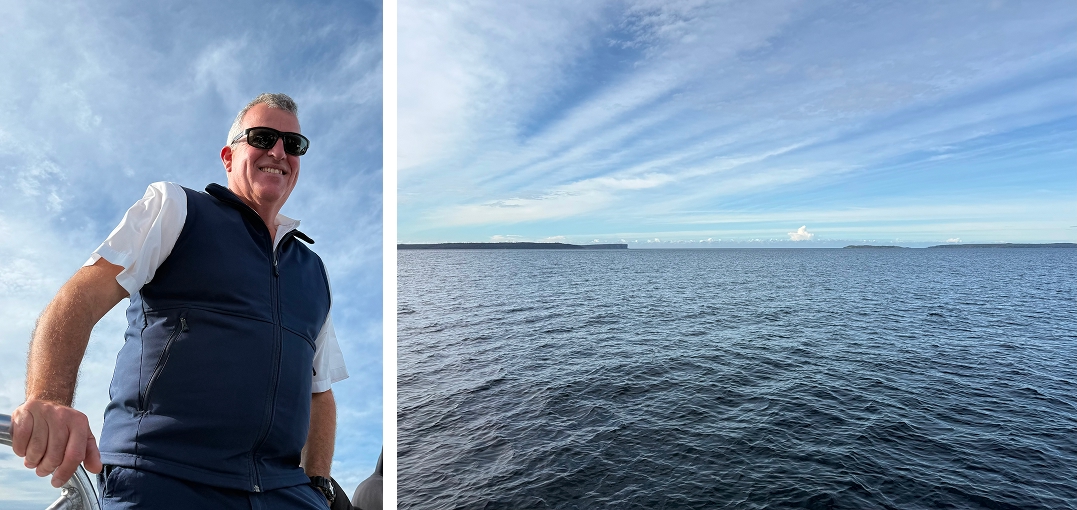
Whale Cruise with Jervis Bay Wild
Past the heads, the swell picks up. We’ve seen bottlenose dolphins, and soaring albatross, sea eagles and other seabirds. Now, all aboard scan the sea for tell-tale white water, vying to spot a whale…
It’s not long before we see humpbacks, and we keep an eye out for other whale species, and for orcas, which while also called killer whales, are really the world’s largest dolphin.
Being near these magnificent humpback whales is thrilling, and Captain Wayne steers carefully, mindful of the NSW government-regulated distance of at least 100 metres away (or 300 if with calves). As for the ultimate whale white-water spectacle that’s sometimes seen, a breach – stupendous!
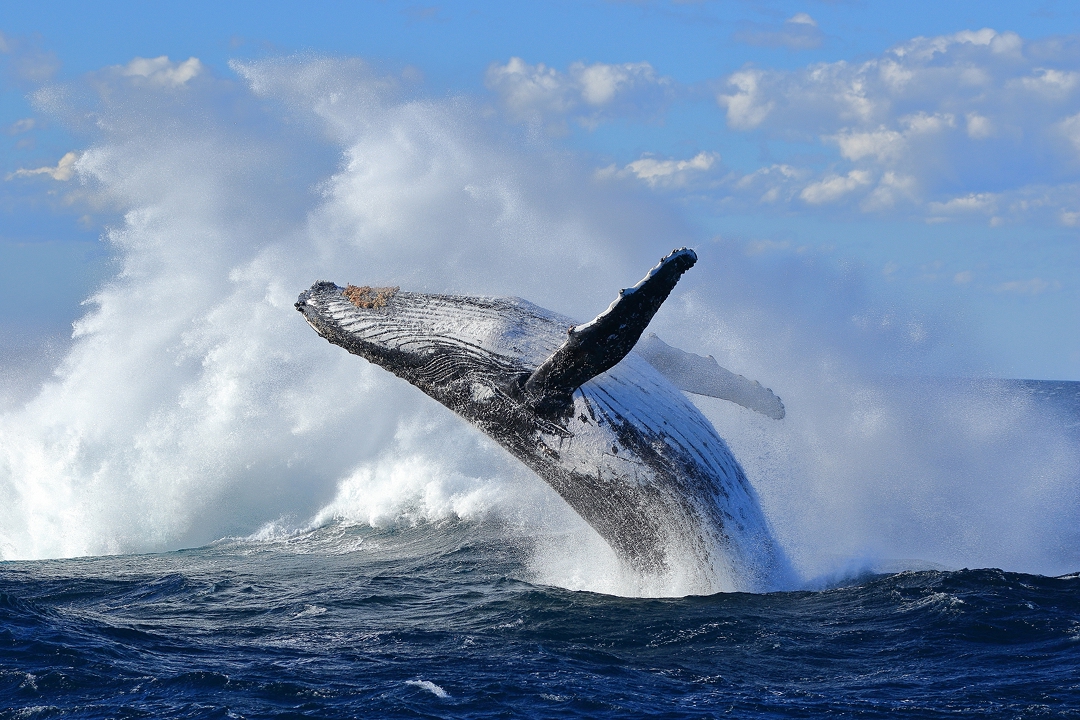
Humpback whale breaching. Photo: Chris Senior
Exploring Huskisson: Maritime Museum, Mangrove Boardwalk and More
How to follow that? Back on dry land, I explore some of what Husky offers…
The main street, including Boobook on Owen, an independent bookshop. The permanent and temporary exhibitions of the Jervis Bay Maritime Museum and Gallery, with plenty of interest including items related to whaling which ceased in this bay in 1915. Then, the Huskisson Mangrove Boardwalk, to be in an ecologically important tidal mudflat environment that can look stunning.
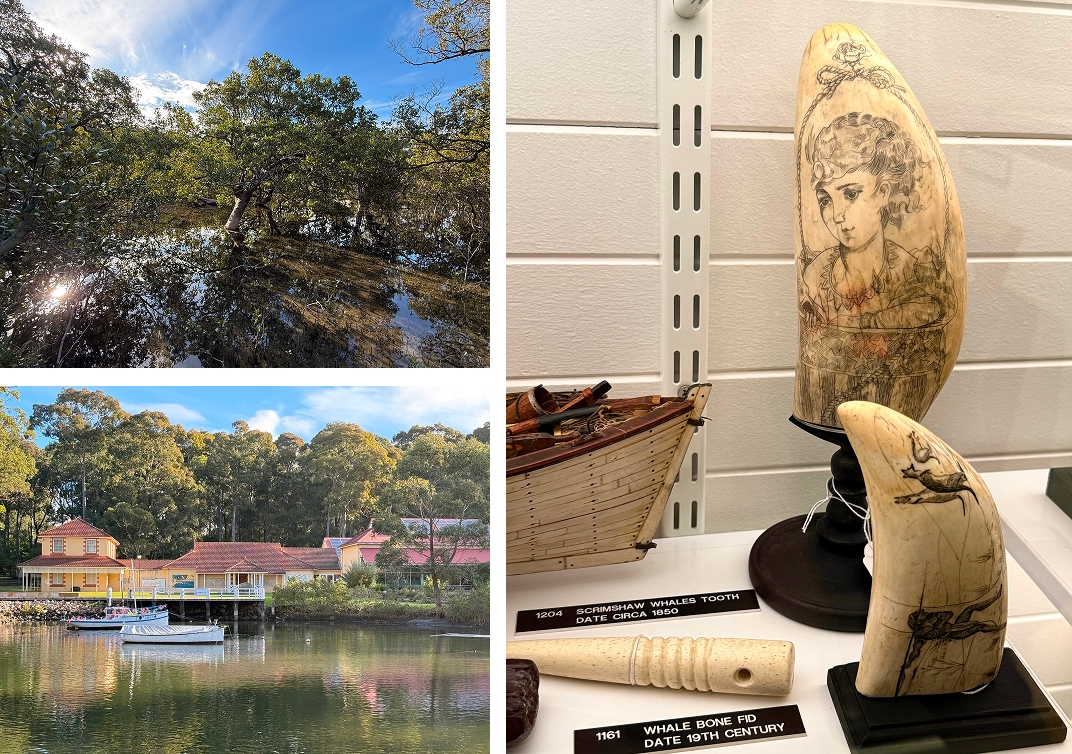
Huskisson – (L top) view from the Huskisson Mangrove Boardwalk, (L below and R) the Jervis Bay Museum and Gallery, with (whale teeth) scrimshaw, Science and the Sea Gallery
It’s time for refreshment. Husky abounds with places to eat and drink, and at other times this trip, I enjoy Italian cuisine at Peter Eva, and Thai at Wild Ginger, two popular restaurants. Now, I turn the CX-5 towards the award-winning craft brewery, Jervis Bay Brewing Co.
Craft Beer, Cinema and Dark Sky Stargazing in Huskisson
A dark beer is a perfect winter brew, and its black with white foam reminds me of those whales – how can it not? Or of this? He is the most gamesome and light-hearted of all the whales, making more gay foam and white water generally than any other of them. That’s a description of humpbacks from Moby Dick.
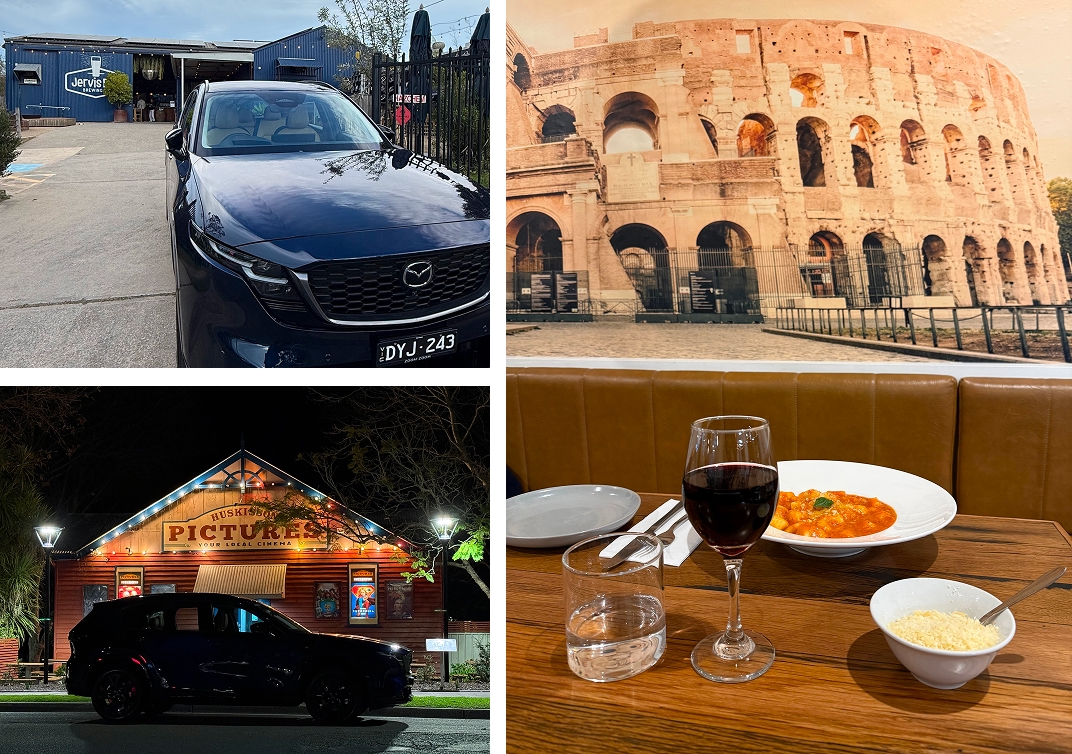
Huskisson – (L top) Jervis Bay Brewing Co., (L below) Huskisson Pictures cinema, and (R) at Peta Eva
Huskisson Pictures is an independent cinema in a charming 1910s building, and it’s a real asset to Husky. Its lights beckon, but tonight my eyes are on the sky’s stars.
Jervis Bay Stargazing runs experiences on a local beach, where an astrophysicist leads you across the night sky, with opportunities to view it via telescope and binoculars. The experience is fascinating and spectacular, and lightning flashing across the bay makes the picture perfect.
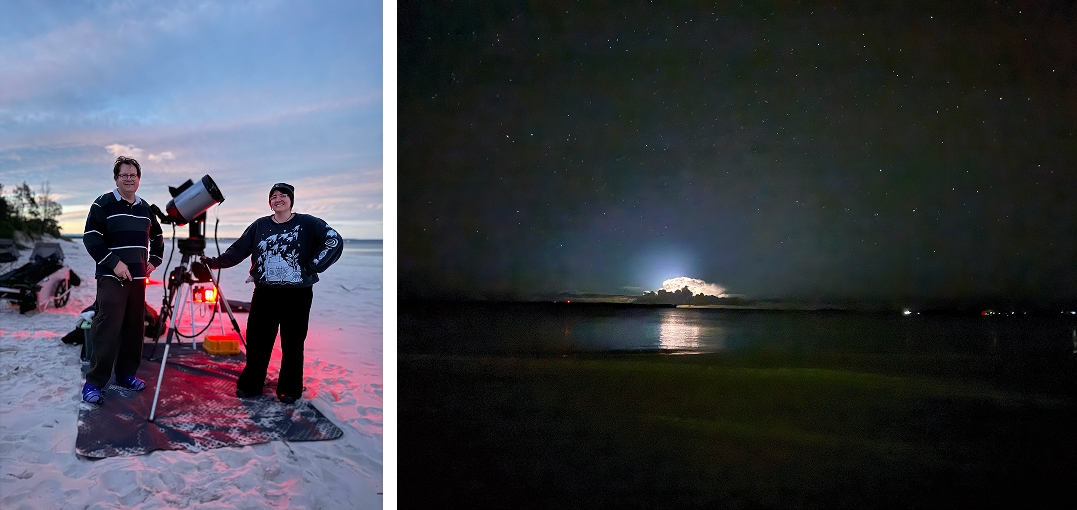
Near Huskisson – Jervis Bay Stargazing experience
So many stunning blues, some deep as to be almost black – that could describe the sky as night falls, or the CX-5’s sophisticated metallic paint, Navy Blue Mica. I’m seeing an amazing range of beautiful hues on the CX-5, responsive to the light that it’s in.
My visit to the Hiroshima headquarters to talk about the design of Mazda’s reds was an honour that provided great insight. Navy Blue Mica is another feat of innovative and systematic design, introduced on the CX-5 in 2026, and it makes a terrific combination with seating in Sports Tan.
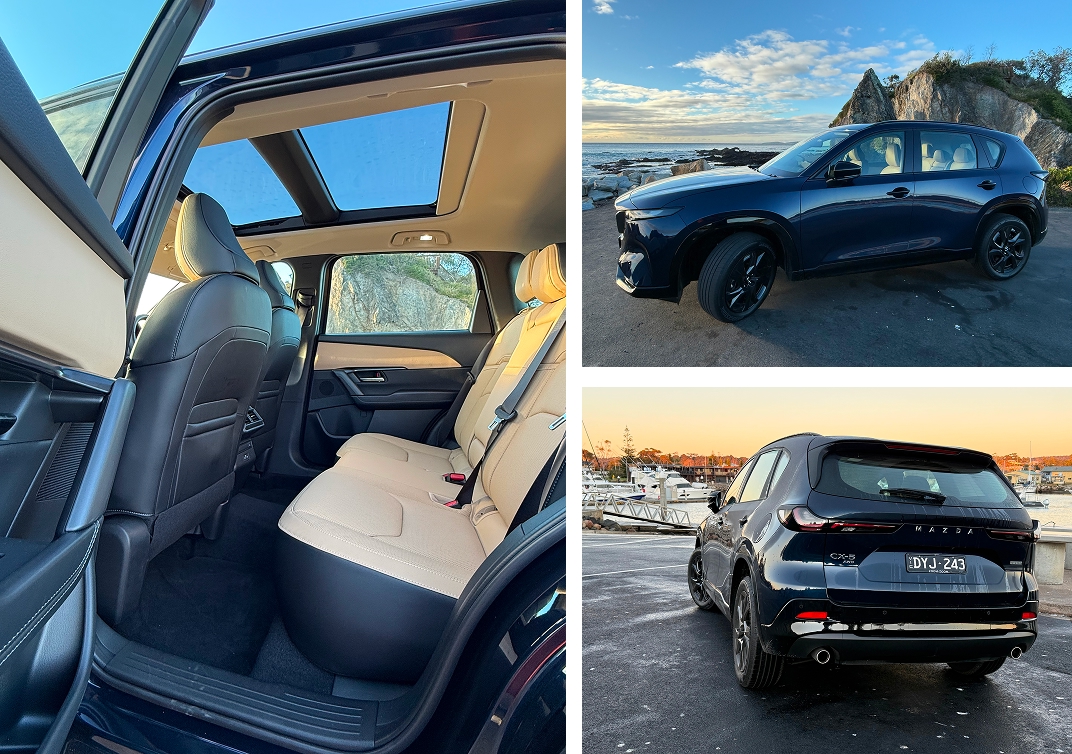
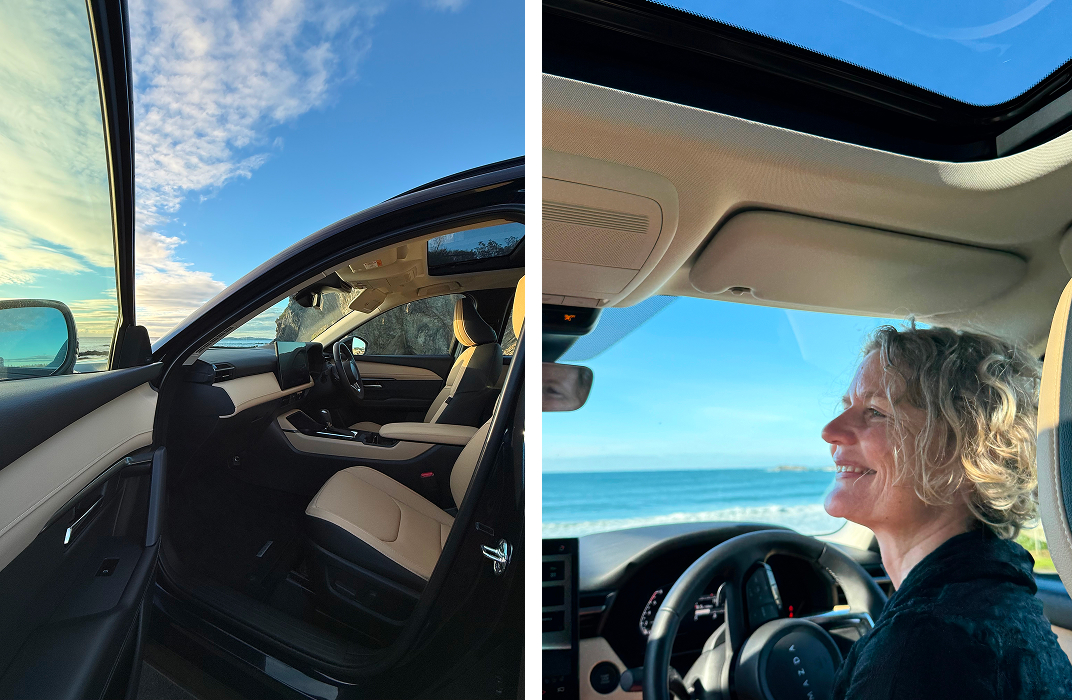
(L) Nappa leather seats in Sports Tan, and (R) two Navy Blue Mica hues, beside Australia Rock at Narooma, and at Bermagui wharf
Day Two: Hyams Beach and the Jervis Bay National Park
On day two, I awake to think of an extraordinary white. Not Moby Dick, though that white whale may well be swimming my dreams; listening to the novel on audiobook this trip is a tremendous experience, thanks to the reader, actor Anthony Heald, and the CX-5’s twelve Premium Bose speakers.
Rather, it’s the famed bright whiteness of the ultrafine sand at Hyams Beach. I drive there, exploring other bayside places as I go, but the exquisite White Sands Walk through the Jervis Bay National Park is another way to arrive. And after scrumptious breakfast at The Cooked Goose, I’m on this beach, appreciating fabulous views to the heads.
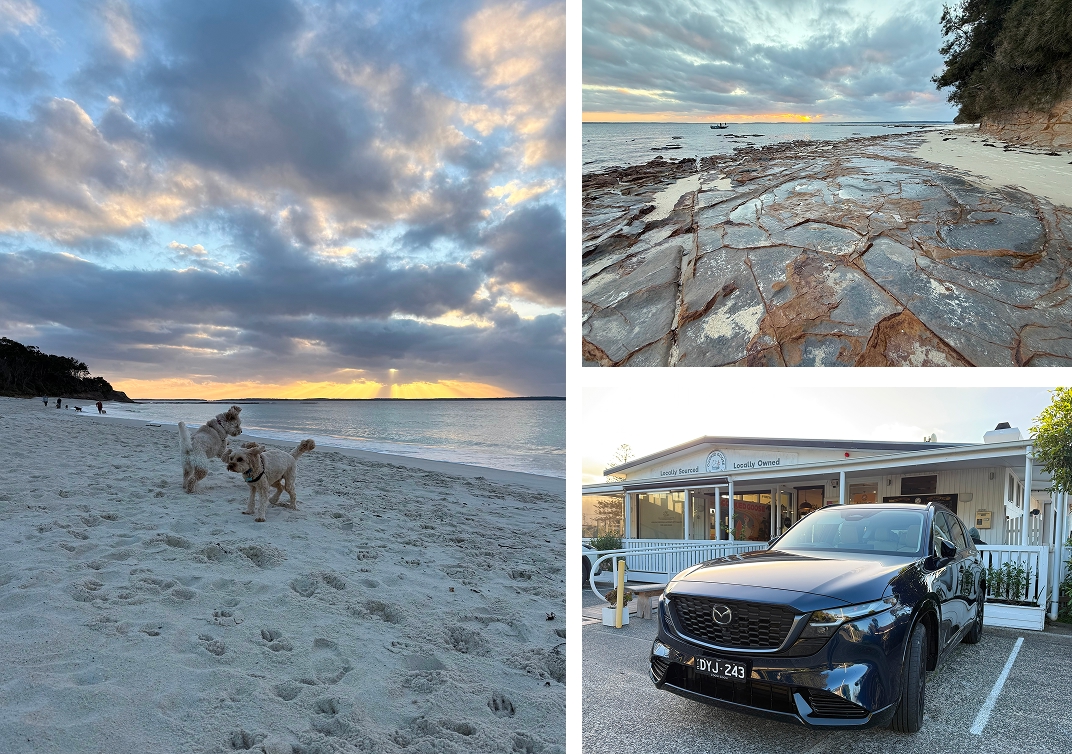
Jervis Bay – (L) Nelson Beach, a dog beach, (R top) Plantation Point, a classic place to catch sunrise on the bay, and (R below) The Cooked Goose at Hyams Beach
Whale Watching from the Jervis Bay Headlands
Both heads are spectacular places to whale watch. Point Perpendicular is in the Beecroft Weapons Range, and only accessible some days. And the Booderee National Park has more than one elevated seaside place for sweeping views. Two reached by car (and a walk) are Governor Head, and the evocative ruins of the 1860 Cape St George Lighthouse.
But it’s time for me to go south.
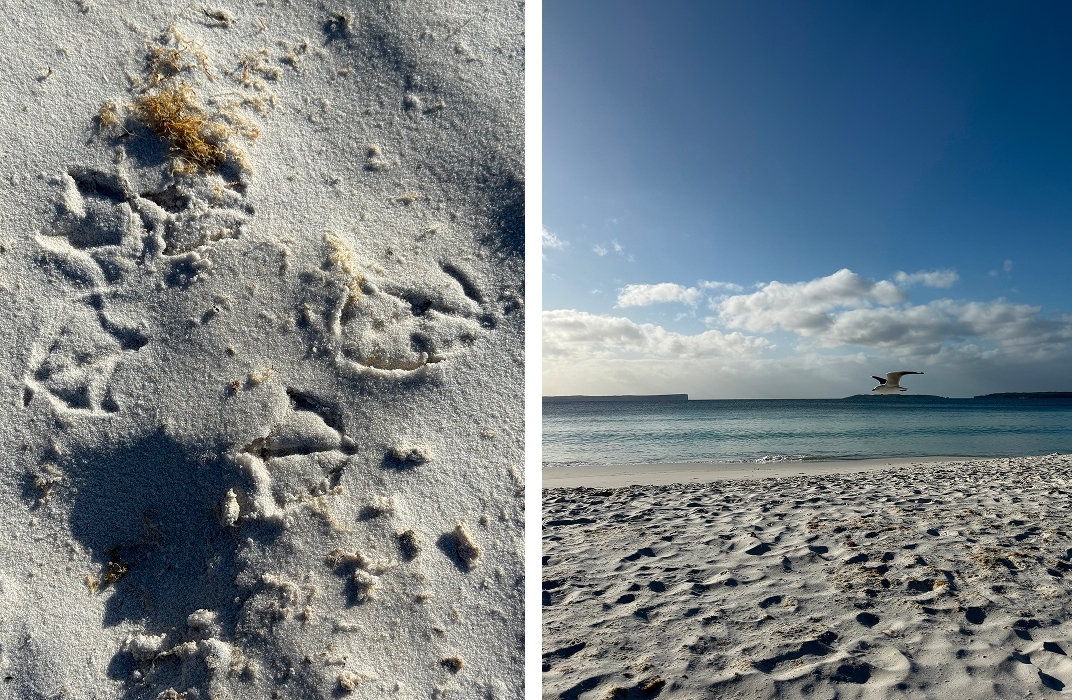
Hyams Beach famous white sand and view to the heads of Jervis Bay, NSW South Coast
In between: Cupitt's Estate, Milton and the Drive South to Narooma
A prodigious expanse of blue sky is above me via the CX-5’s panoramic sunroof, but it’s cold out. Absolutely, I’m appreciating this AKERA’s luxury heating; warmth builds in the Nappa leather seat and steering wheel as I set the nav and regard the map, large across the 15.6-inch touchscreen.
Cupitt’s Estate is my stop – a small-batch vineyard near Milton. The wine tasting and a lunch are delicious, and I spot Jervis Bay Stargazing among the Estate’s events of music and more.
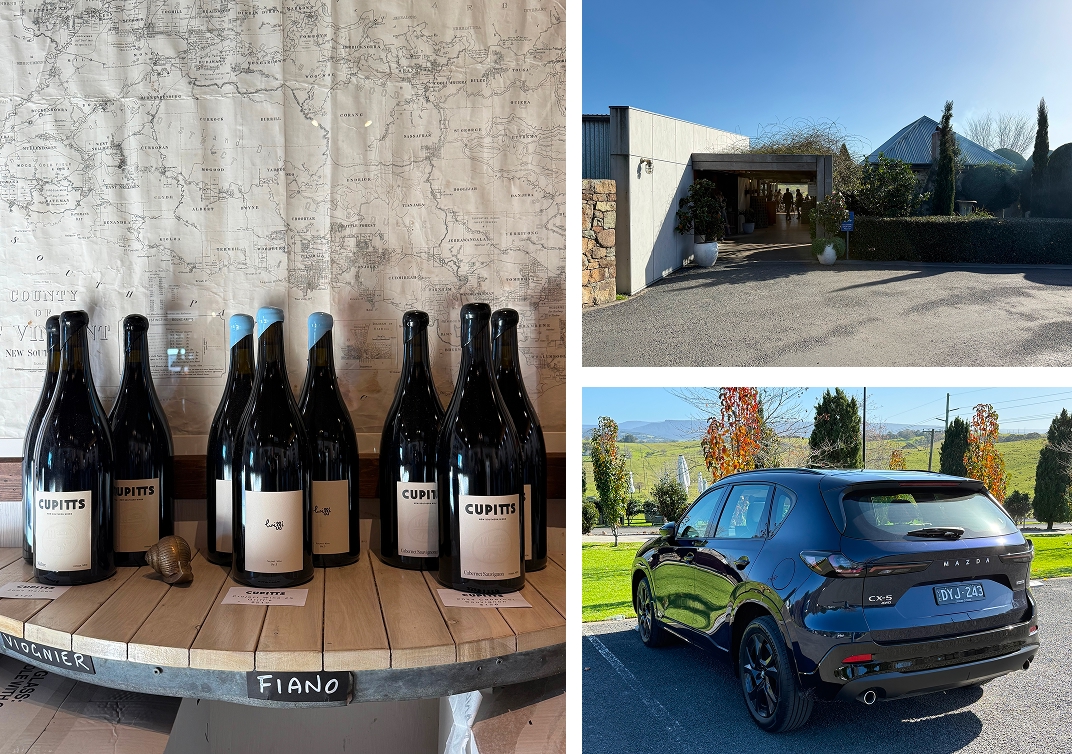
Near Milton – Cupitt’s Estate vineyard
Then the CX-5 and I zoom south on the A1, into scenery that’s mostly farmland and bushland. I pass turnoffs to coastal places of great beauty and interest, not least the Munyip Trail interpretive walk, and the national parks.
I’m in the mood to drive…
The novel unfurls. The CX-5’s nineteen-inch alloy wheels hug the curving roads. The AWD handling is superb, and the drive smooth, with six speed transmission and plenty of power for climbs from the in-line four cylinder, sixteen valve Skyactiv-G petrol engine, delivering up to 132 kilowatts of power.
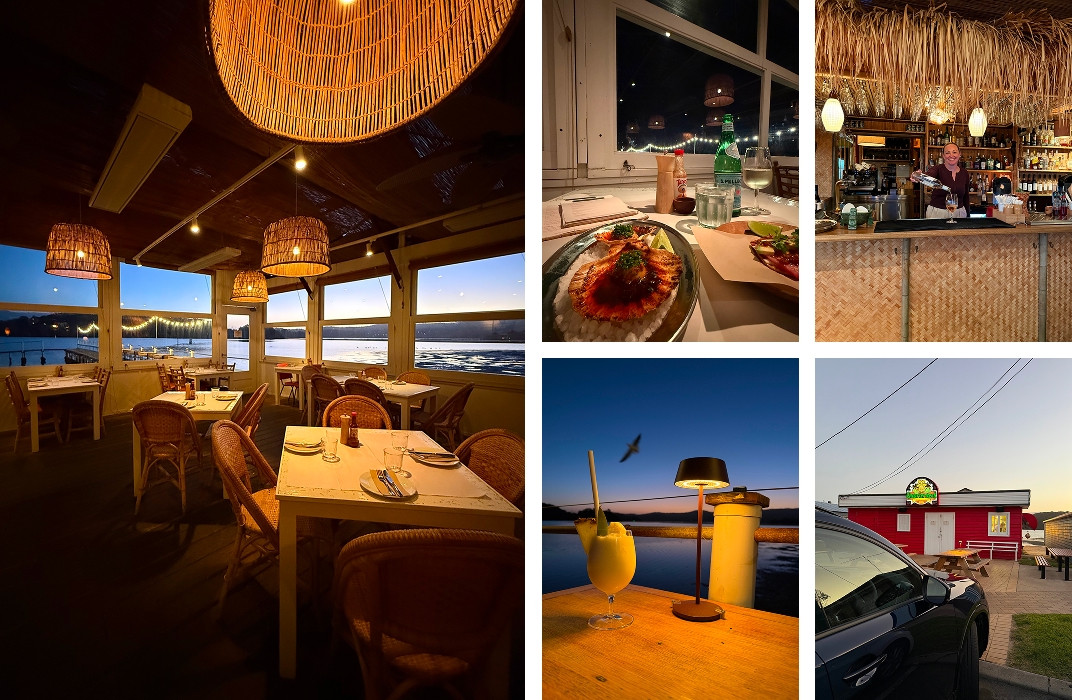
Narooma – The Quarterdeck beside the Wagonga Inlet
Narooma: Wagonga Inlet, The Quarterdeck and The Kinema
Seemingly in no time, I’m in the Eurobodalla at Narooma, where the geography has an abundance of curving forms. Its natural scenery is unforgettable, even before you first see the Wagonga Inlet colouring up in reflection of sunrise or sunset.
By sunset, I’m at The Quarterdeck, a Merivale restaurant beside the Inlet. Forget winter! A piña colada perfectly matches the sunny feel of the tiki-style design and what’s soon the buzz of a full house enjoying seafood and more.
Later? I go to The Kinema, another independent cinema in an historic hall, this one 1930s Art Deco. The program mixes film with the occasional live performance, and there, I hear great news; a new-build Narooma Arts Centre with an art gallery is opening this year.
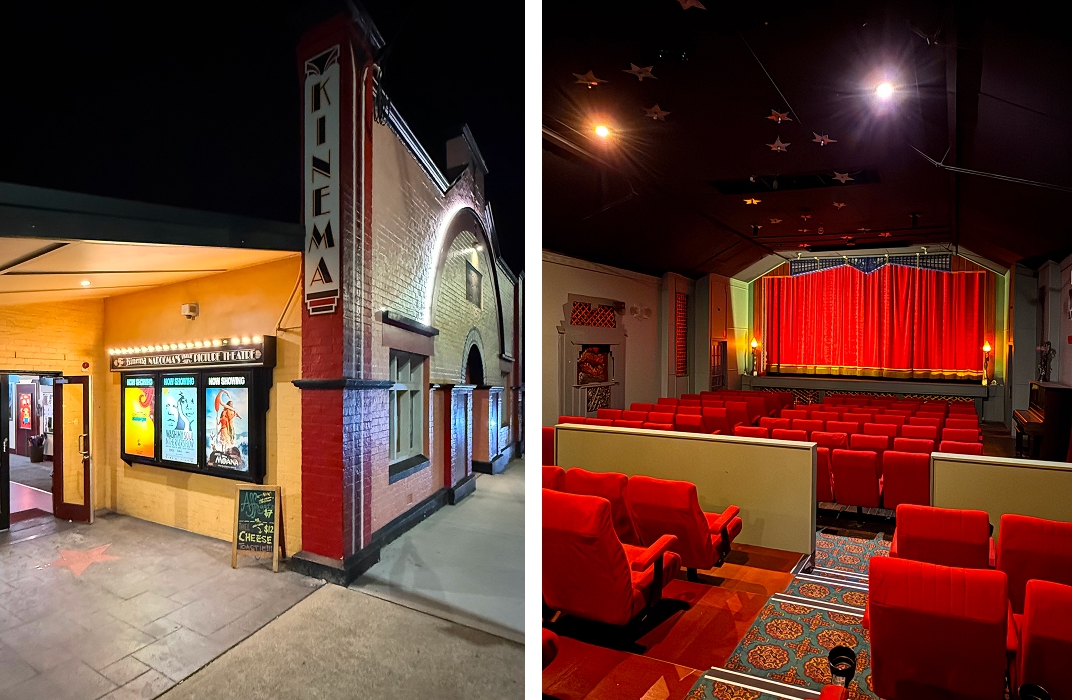
Narooma – The Kinema cinema
Day Three in Narooma: Seals, Geology and Oysters on the Wagonga Inlet
On day three, I’m up and out early, exploring near the Inlet mouth to bird watch and, yes, whale watch up at Bar Rock Lookout… … …I see whales, far distant, and sparkling sea.
Going down by the break walls to admire Australia Rock – an upstanding natural chert formation with a (more or less) Australia-shaped hole – I spot fur seals swimming in speedy exuberance, or dare I say it, sport mode?
Seeing seals in and around Narooma is a delight, but no surprise. Barunguba Montague Island is close – a visitable NSW National Parks and Wildlife Service (NPWS) nature reserve with an (1888) lighthouse that’s an important haven for fur seals, seabirds and other wildlife.
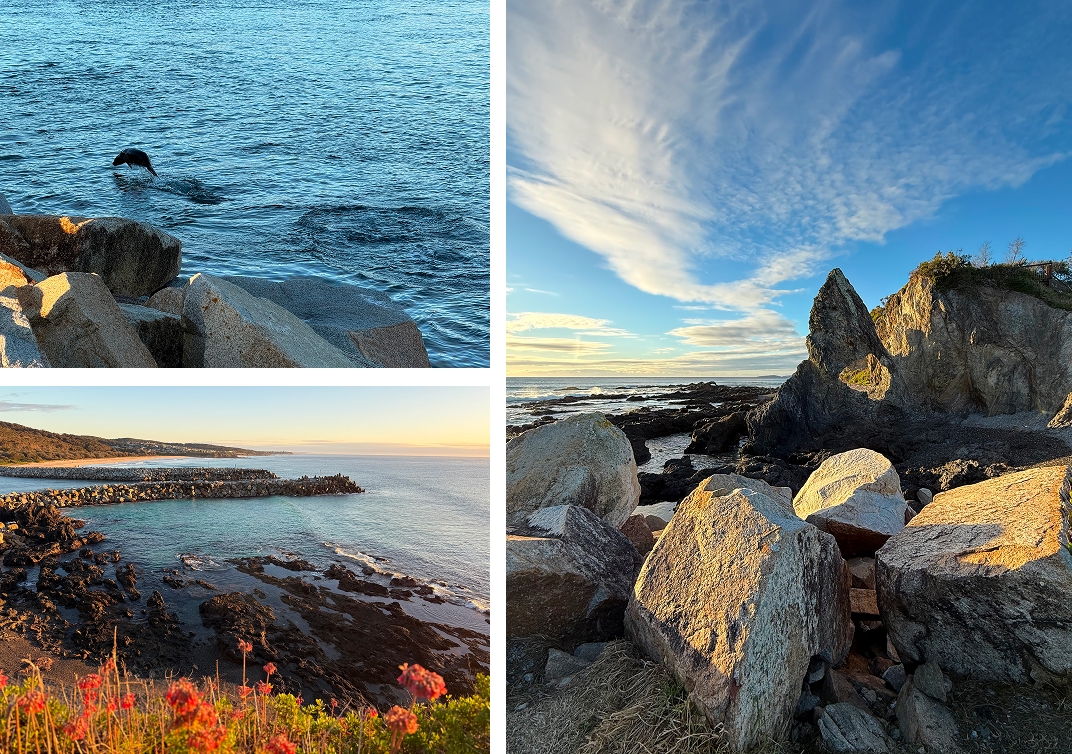
Narooma – near the mouth of the Wagonga Inlet, (L above) fur seal, (L below) view from Bar Rock Lookout, and (R) Australia Rock
At coffee time, I seek out The Whale – a small 1970s hotel stunningly transformed by Merivale. You don’t have to stay overnight to breakfast here or dine in its Cantonese restaurant, Queen Chow. I enjoy excellent coffee and pastry in the vintage-style sunroom.
Merivale has recently revitalised several hospitality venues in Narooma, this hotel and The Quarterdeck, plus others. As a set, they make a strong addition to the town.
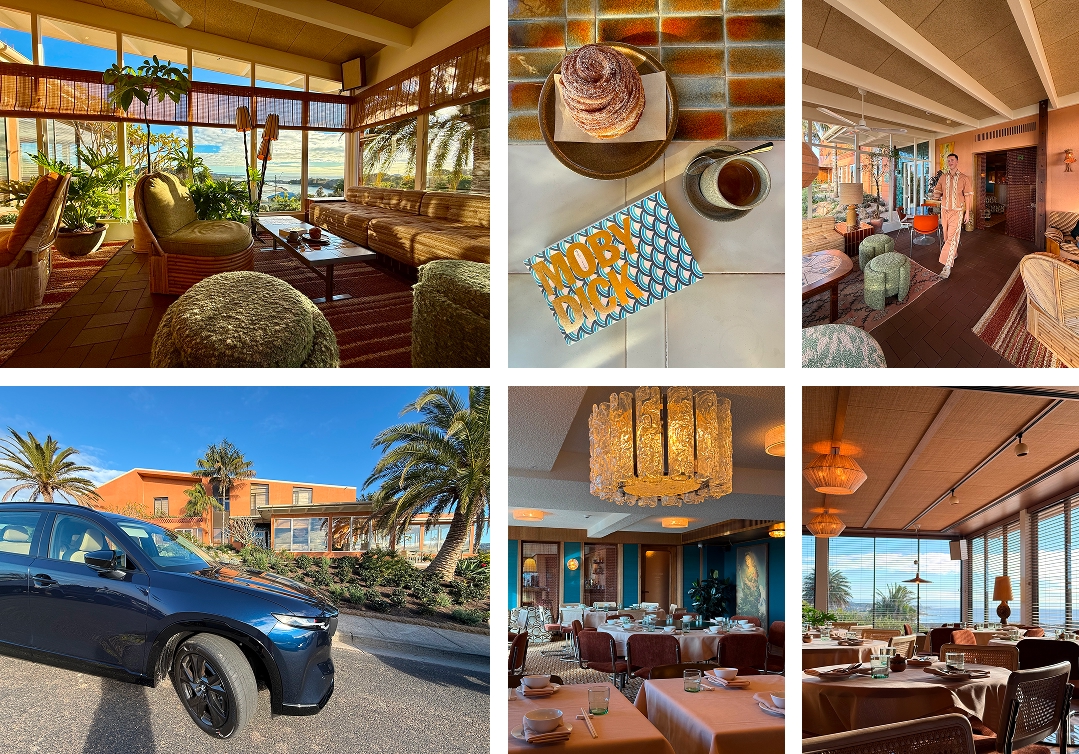
Narooma – The Whale
Taking a drive by the watersides of Narooma, I don’t miss the main surf beach, with its Glasshouse Rocks and outcropping pillow lava; the Eurobodalla boasts awesome geology at this site and elsewhere.
To spot marine wildlife, I’m at the Mill Bay Boardwalk beside the Inlet, where the biggest attraction is skates, and back by the sea …There she blows! … I see several humpbacks swimming, this time close enough for a fair binocular view.
Time for a glass of sparkling!
I lunch at The Oyster Farmer’s Daughter, where freshly shucked Sydney Rock Oysters and other seafood are served. Here, amid the Inlet’s natural beauty, is quite the place to sample oysters, a produce of the area that’s rightly celebrated, especially at the annual Narooma Oyster Festival.
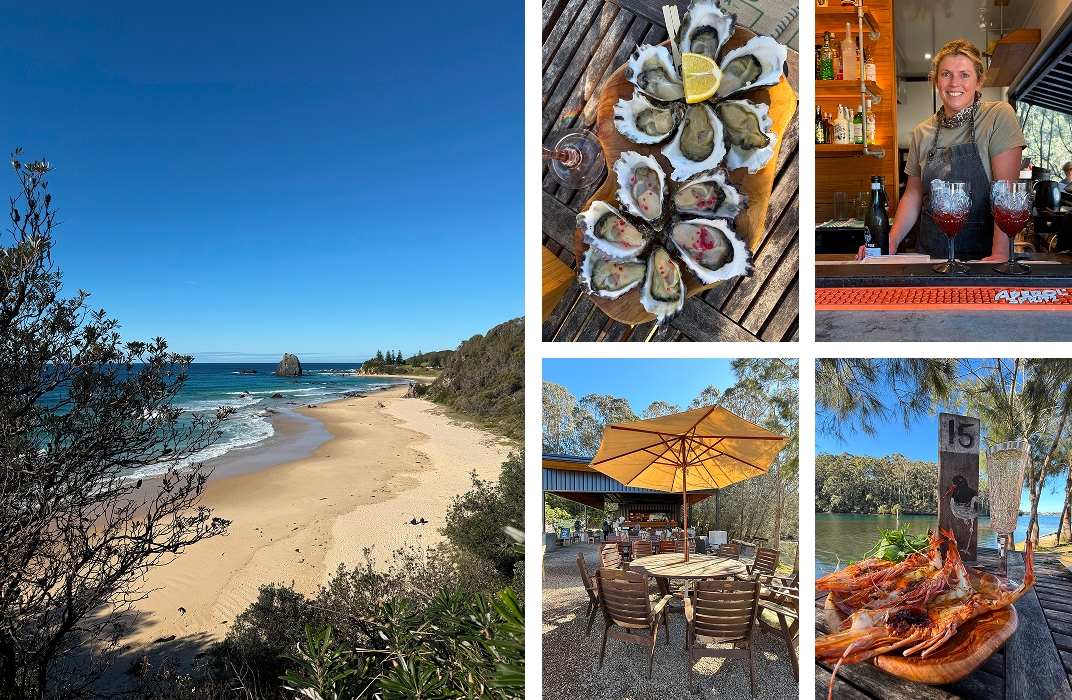
Narooma surf beach with Glasshouse Rocks and The Oyster Farmer's Daughter restaurant, Narooma NSW
The Sapphire Coast: Bermagui's Whale Waters and Tathra Headland
Going south, I turn the CX-5 off the A1 to enjoy the slower route to Eden via seaside Bermagui and Tathra. I don’t stop at Bermagui, not yet.
Humpbacks generally swim on the coast side of the continental shelf edge as they migrate along eastern Australia, and there’s nowhere on the eastern mainland where the coast and continental shelf edge come quite as close as near Bermagui, there only around twenty kilometres apart.
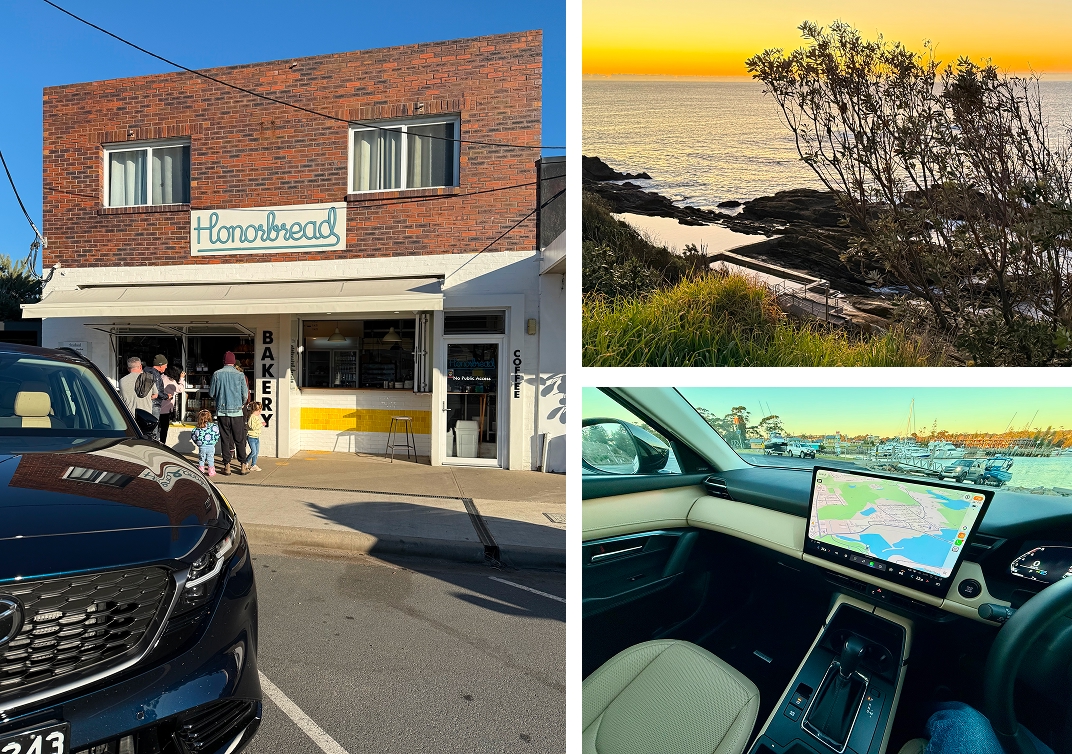
Bermagui – (L) Honorbread, (R above) sunrise at The Blue Pool, and (R below) early morning at the wharf
This closeness makes sense of Bermagui’s renown for whale watching, and of this area being among the increasing number of locales (including near Jervis and Twofold Bays) where whales have been observed feeding.
No, I shan’t miss Bermagui, especially as it’s also attractive for human food. It’s long been famed for fishing and, so, seafood, but it’s not just seafood that’s delicious here across Elsewhere, Honorbread, the Gelati Clinic and more. I’ll stay a night and see its sights as I return north.
Now, the CX-5 and I curve south into the gorgeous Sapphire Coast – Bermagui to Eden –until Tathra, stopping for one of this coast’s best whale watching spots.
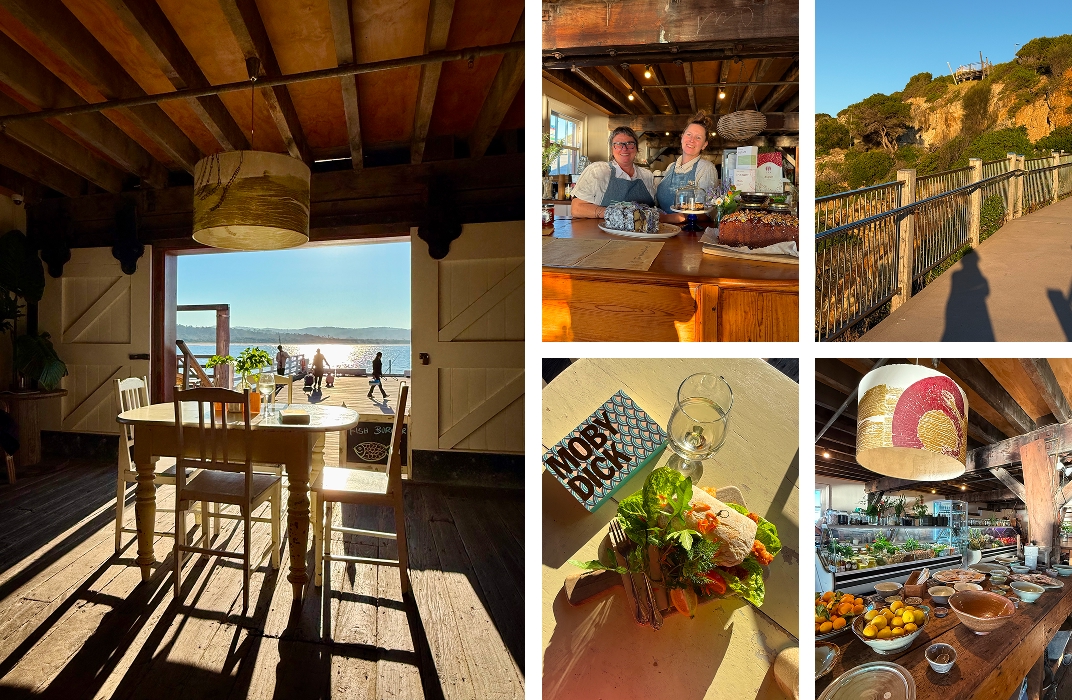
Tathra – The Wharf Local, and the accessible walkway to the lookouts of Tathra headland
Parking the CX-5 by the wharf, I take the accessible walkway up to the Tathra Headland lookouts. I wait, patiently… … And, well… what views! But there are no whales, not now. Perhaps just after I leave, and such is the way of whale watching, making each sighting the more exhilarating.
Returning to the wharf, I pass the CX-5, its evolved Kodo form looking athletic, ready to go. But it’s time for a second lunch, this one at The Wharf Local, a licenced café and art gallery.
At a sunlit table, I’m served the most delicious squid and fish burger. I relax, plunge into Moby Dick for Melville’s comical take on the science of his times, and then think about modern cetology and the whales of other species who swim off this coast – the southern right, minke, blue and others.
Then, I too am ready to go.
Stepping into the CX-5’s spacious cabin, I’m aware that I enjoy these drives for all the CX-5’s design elements – visible and invisible – and that the whole combination is what’s inspiring a sense of oneness, car and driver, jinba attai.
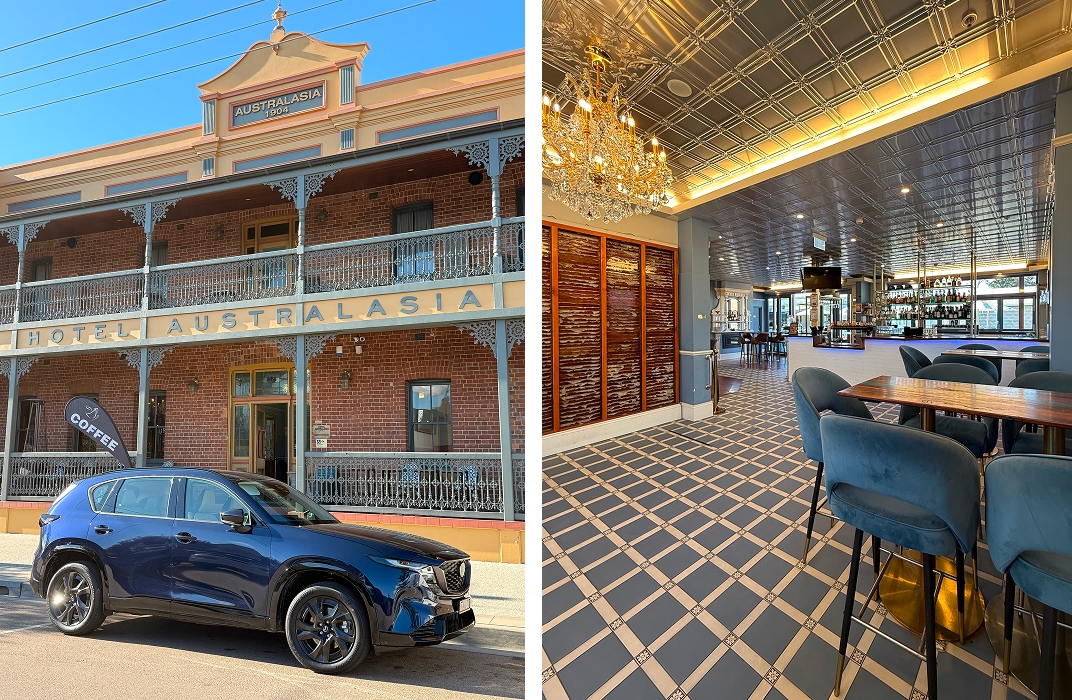
Eden – The Australasia Hotel
Twofold Bay: Eden's Killer Whale Museum and the Legend of Old Tom
The CX-5 and I, we pass Merimbula (with an airport serving Qantas and Rex), and drive into the centre of Eden, on land that juts out into Twofold Bay, the third deepest natural bay in the southern hemisphere.
It’s a true espresso speed stop at the recently restored 1906 Australasia Hotel. I’m due at the Eden Killer Whale Museum.
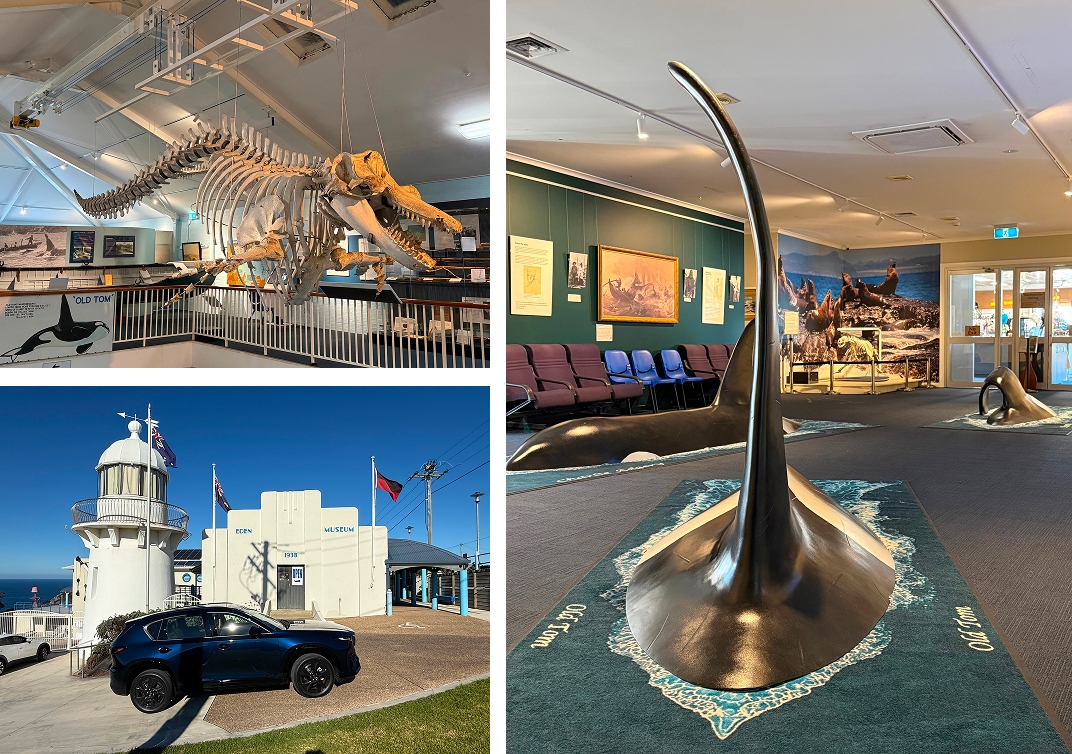
Eden – Eden Killer Whale Museum
At this Museum, I see its founding object – the skeleton of the orca ‘Old Tom’, symbol of an extraordinary interspecies co-operation wherein orcas visiting Twofold Bay used to help people to hunt whales. When Old Tom died in 1930, he was the last orca who’d done so. Whaling ceased in this bay in 1929.
Orcas are apex predators, and whales are among their prey. The whalers recognised the returning individual orcas by their characteristic black and white markings and fin shapes and gave them names.
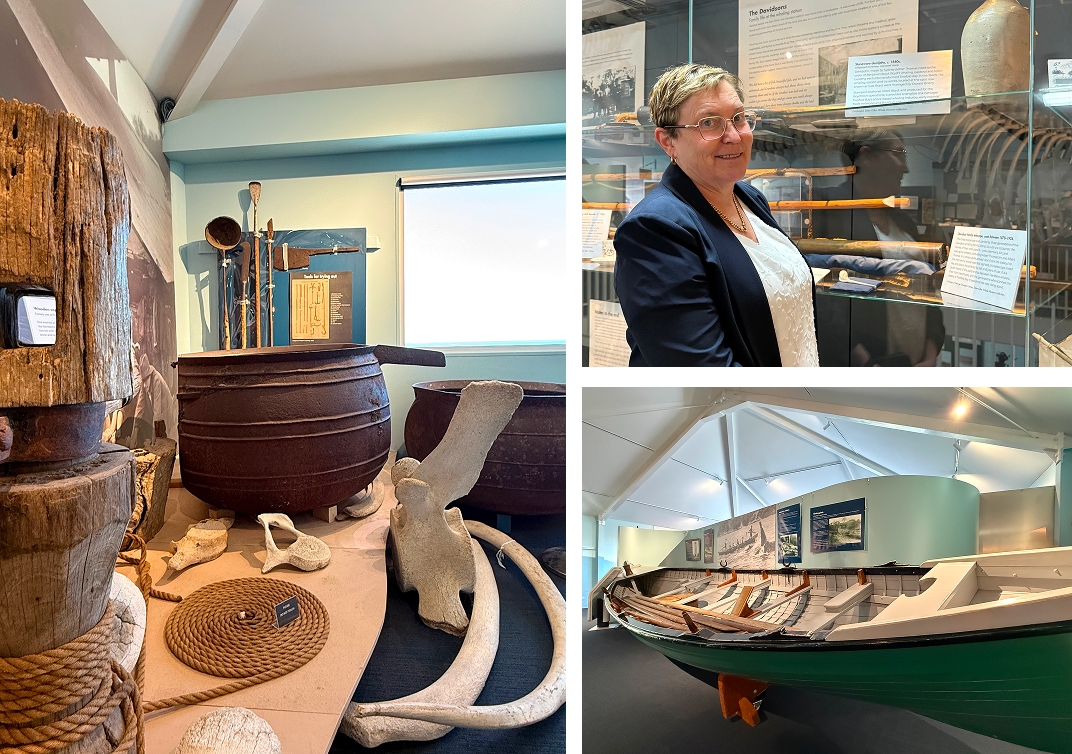
Eden – Eden Killer Whale Museum
The Collections Manager, Angela George, and I talk about the objects and stories presented here. There’s a lot to the interconnected history of people and orcas and whaling in this bay, and the local Thaua people of the Yuin Nation are very much a part of it. This Museum is an excellent place to discover this history (and more).
And my visit is the more vivid for having taken in the rich and massive detail that Melville wrote into Moby Dick. His 1840s whaling experience and the novel’s 1851 publication were contemporary to the whaling in Twofold Bay, 1828–1929.
With a sense of history, what you see in the present can seem the more understandable and astounding, and the history that we share with whales is no exception.
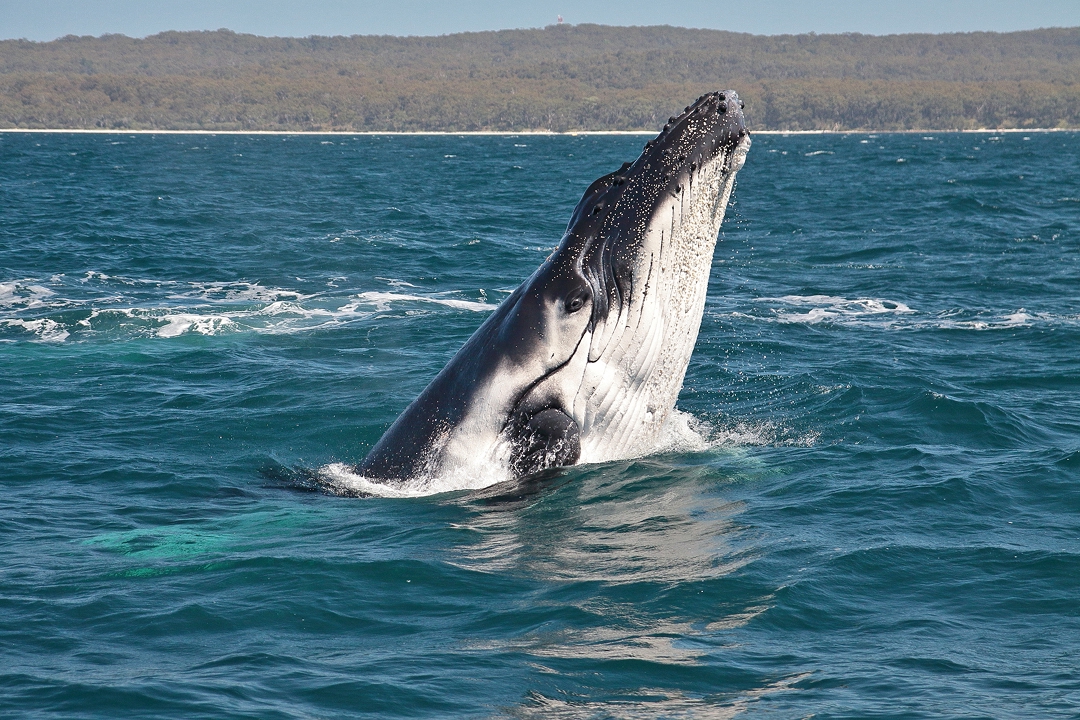
Humpback whale in Jervis Bay. Photo: Chris Senior
Angela highlights the annual and celebratory Eden Whale Festival, next held on 16–18 October 2026. It happens across town, including at the Museum.
There’s clear enthusiasm in Eden about the annual whale migration, and about how decades of global conservation efforts have allowed some whale populations to increase again. In this, the humpbacks swimming off this coast are a standout success.
Humpback Whales: From Near Extinction to 50,000 Strong
It’s thought that in 1963, when the International Whaling Commission stopped humpback whale hunting in the southern hemisphere, only a little over 100 individuals were alive in this humpback ‘Group V’ who migrate eastern Australia – true survivors. These days, this group is estimated as at least 50 000.
That’s not to say that they don’t face current survival pressures, or that others aren’t already foreseen. The future of krill is shaping up as a foremost concern.
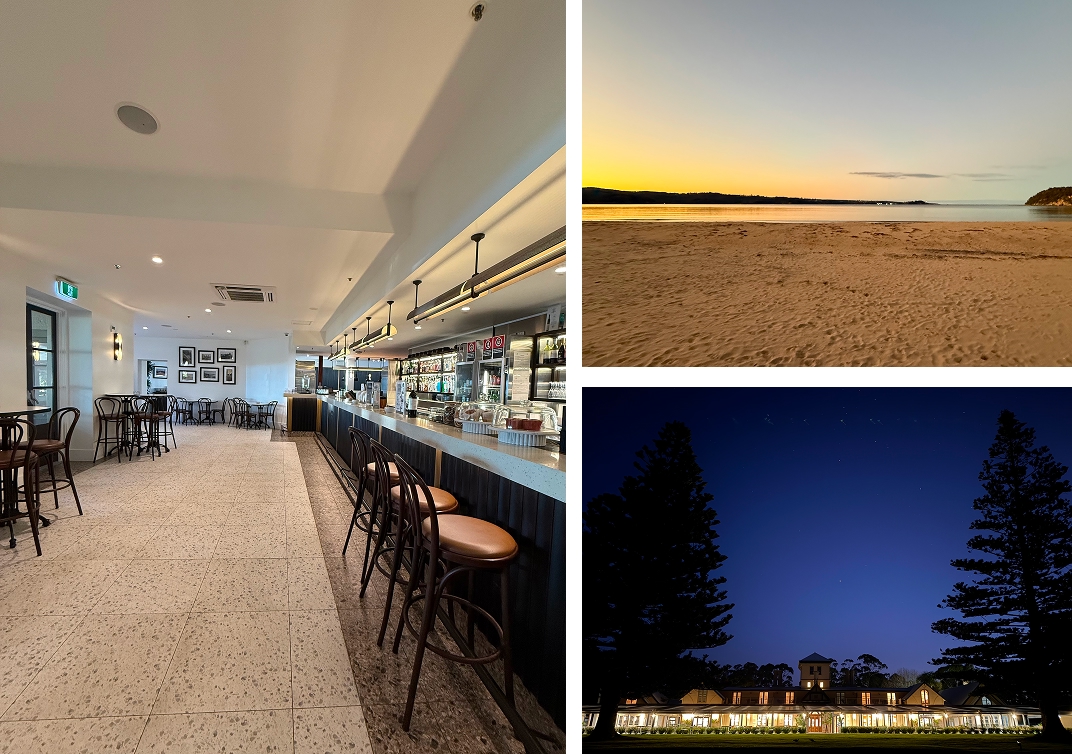
Eden (Boydtown) – (R top) View to the lights of Eden from Beermuna, Boydtown Beach, and (L, and R below) The Seahorse Inn beside Beermuna
The Seahorse Inn is on the southern fold of the bay. Driving up at dusk to dine and stay, the bay is a scene of great calm and it’s hard to picture whaling in view here, as it was.
One of the whaling operations to run here was in the 1840s, owned by Benjamin (Ben) Boyd. He held grand plans for this bayside area which were far from realised before he left Australia in 1849, in financial ruin and a controversial figure.
The Seahorse Inn built for Boyd in the 1840s was abandoned, before being saved from literal ruin in 1936 by the vision of Richard Whiter, a pioneer in the road holiday tourism industry from VIC. Today, it’s a four-star boutique hotel, with a brasserie and bar to enjoy on the Inn’s bayside.
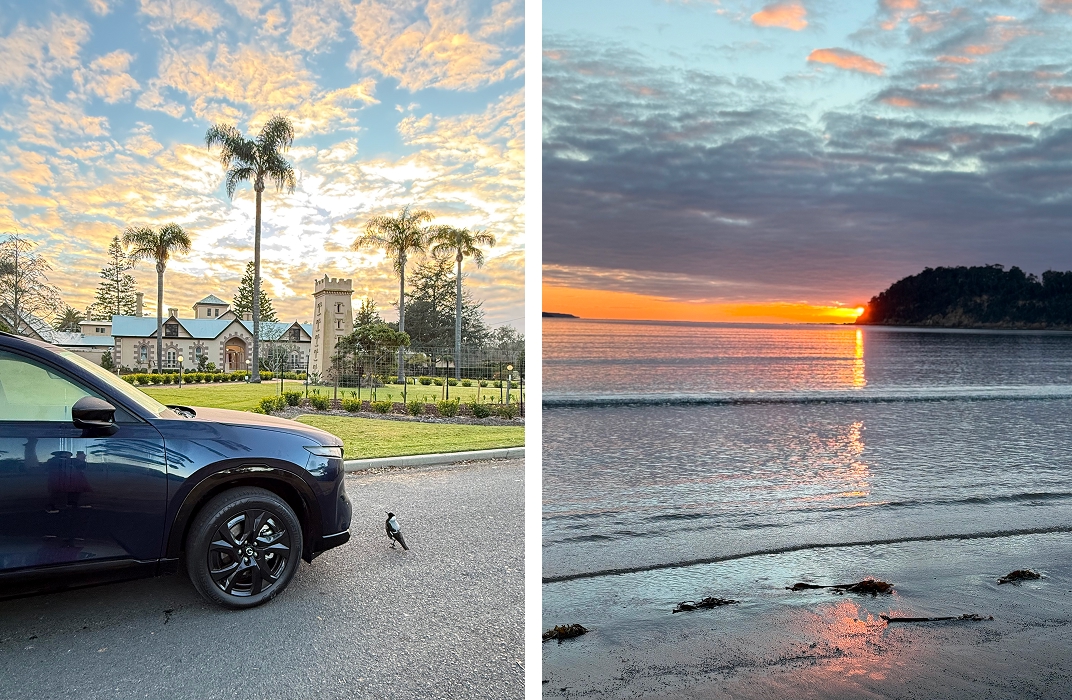
Eden (Boydtown) – (L) The Seahorse Inn, with a replica of Boyd’s Tower in front, built as a phone booth (R) sunrise at Beermuna, Boydtown Beach
Day Four: Beermuna Beach, Boyd's Tower and Turning the CX-5 North
At sunrise on day four, I step out of the Inn and onto Beermuna, Boydtown Beach. I look towards the southern edge of the bay, thinking of the October Eden Whale Festival as the time to tour the Davidson Whaling Station, a NSW NPWS historic site.
And anytime of the migration is opportune to be in the Beowa National Park at Boyd’s Tower, an 1840s sandstone whaling lookout, or the Green Cape Lighthouse. These famed whale watching places are reached by road, and they start and finish the Park’s spectacular coastal Light to Light Walk.
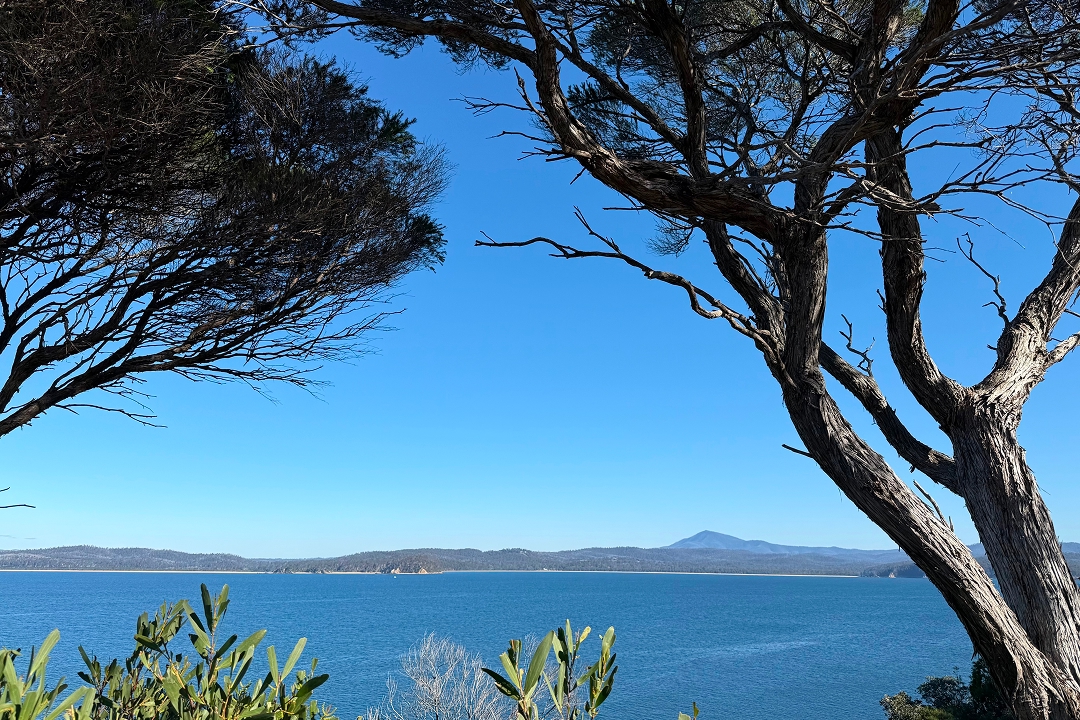
Eden – View from Eden Park towards the southern fold of Twofold Bay. Beermuna is the beach centre of view, in front of the peaked Balawan, Mt. Imlay
But it’s time for me to turn the CX-5 north, and first to return to Eden. I have coffee – where else? – at Ishmael’s.
Over an excellent cup, I plan my next moves, including to the North of Eden distillery. Among the more in Eden, there’s the Aboriginal Whale Dreaming Trail, a short, guided Bundian Way walk, available on some dates. And there’s the Rotary Park lookout, where I’ll go for the fabulous scenery, not daring to hope for a whale close in sight.
As at Jervis Bay, the southward return of the humpbacks with their calves, when they journey more slowly and closer to the coast, will bring much better odds for whales to be swimming in the bay. At Eden, the Museum helpfully announces those occasions via a rooftop siren.
And I reflect on my trip. Some 600 kilometres return is quite a way and yet a doddle, whale-scale. The humpback highway is some 10 000 kilometres return. Epic.
The trip’s scope is big, though – bigger than whales, for you can’t whale watch all the time.
Or can you?
Why not grab your key and go coastal for the migration? See whales and as much more as you want.